
If you’ve ever looked at a shipment and thought, “This is too big for LTL… but not big enough for a full truck,” you’re not alone.
This is exactly where partial load shipping comes into play.
It’s one of the most overlooked options in freight—and in a lot of cases, it’s actually the best one.
Let’s break down what it is, when it makes sense, and why more shippers are starting to use it.
What Is Partial Load Shipping?
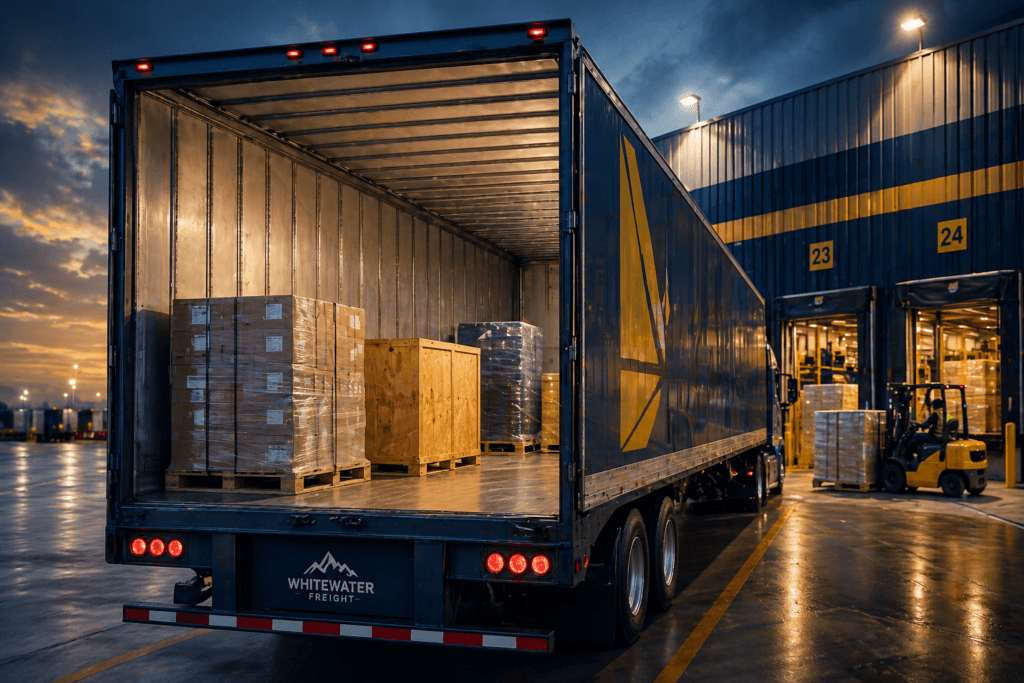
Partial load shipping (sometimes called partial truckload) is when your freight shares space on a truck—but without going through the full LTL network.
That means your shipment rides alongside other freight, but:
- It typically stays on the same truck from pickup to delivery
- There are fewer (or no) terminal transfers
- There is significantly less handling
Think of it as the middle ground between LTL shipping and truckload shipping.
How It’s Different from LTL
LTL shipping is built around a hub-and-spoke system.
Your freight moves through terminals, gets sorted, transferred, and combined with other shipments along the way.
That system works well—but it also adds complexity.
With partial load shipping:
- There are fewer touchpoints
- Your freight is handled less
- Transit is often more direct
This reduces the chances of delays, reclassification issues, and damage.
How It’s Different from Full Truckload
With full truckload shipping, you’re paying for the entire trailer—even if you don’t need all of it.
Partial load allows you to:
- Use only the space you need
- Share the cost of the truck
- Avoid overpaying for unused capacity
It’s a more efficient use of space—without the complexity of LTL.
When Partial Load Makes the Most Sense
Partial load shipping is usually the best fit when:
- Your shipment is between 6–18 pallets (rough guideline)
- Your freight is too large for LTL but doesn’t fill a trailer
- You want faster transit than LTL
- You want less handling and lower risk
It’s especially useful for freight that’s:
- Fragile
- High-value
- Time-sensitive—but not urgent enough for dedicated truckload
The Hidden Advantage: Less Handling
One of the biggest benefits of partial load shipping is something most people don’t think about until it becomes a problem:
Handling.
Every time freight is moved, transferred, or reloaded, the risk increases.
With fewer touchpoints, partial load reduces the chances of:
- Damage
- Lost freight
- Unexpected delays
It’s a quieter, smoother way to move freight.
The Most Common Mistake
The biggest mistake we see is shippers forcing freight into LTL because it “kind of fits.”
On paper, it looks cheaper.
But in reality, it can lead to:
- Reclassification charges
- Extra fees
- Longer transit times
- More risk of damage
Sometimes the better option isn’t obvious until you zoom out and look at the full picture.
How Whitewater Freight Helps
At Whitewater Freight, we don’t just default to LTL or truckload.
We look at the in-between.
We evaluate:
- Shipment size and weight
- Timeline expectations
- Risk tolerance
- Total cost—not just base rate
Then we help you choose the option that actually fits.
If you want to see how this fits into the bigger picture, you can explore our full range of freight services.
The Bottom Line
Partial load shipping fills a gap that a lot of shippers don’t realize exists.
It’s often the most efficient option when your freight falls between LTL and full truckload.
And when used correctly, it can save you money while reducing risk at the same time.
FAQ
What is partial load shipping?
Partial load shipping is when your freight shares space on a truck but moves more directly than traditional LTL shipments.
Is partial load cheaper than truckload?
Yes, in many cases, because you’re only paying for the space you use rather than the entire trailer.
Is partial load faster than LTL?
Often, yes. It typically involves fewer stops and less handling.
How many pallets qualify as partial load?
Generally between 6–18 pallets, but it depends on dimensions and weight.
Freight without the surprise party.
Need help moving freight without the surprises?
Whitewater Freight helps shippers move truckload, LTL, flatbed, hot shot, and partial loads with proactive communication, careful carrier vetting, and real humans who answer the phone.
Get a Quote