
Flatbed freight shipping built for the real world.
Flatbed freight is not just “put it on an open trailer and hope gravity behaves.” Steel, lumber, pipe, machinery, building materials, and oversized freight all need the right equipment, the right carrier, and the right details handled up front.
Whitewater Freight helps shippers coordinate flatbed freight with carrier vetting, securement awareness, clear communication, and people who understand that open-deck freight deserves a real plan.
What it is
A freight option for loads that need open-deck flexibility.
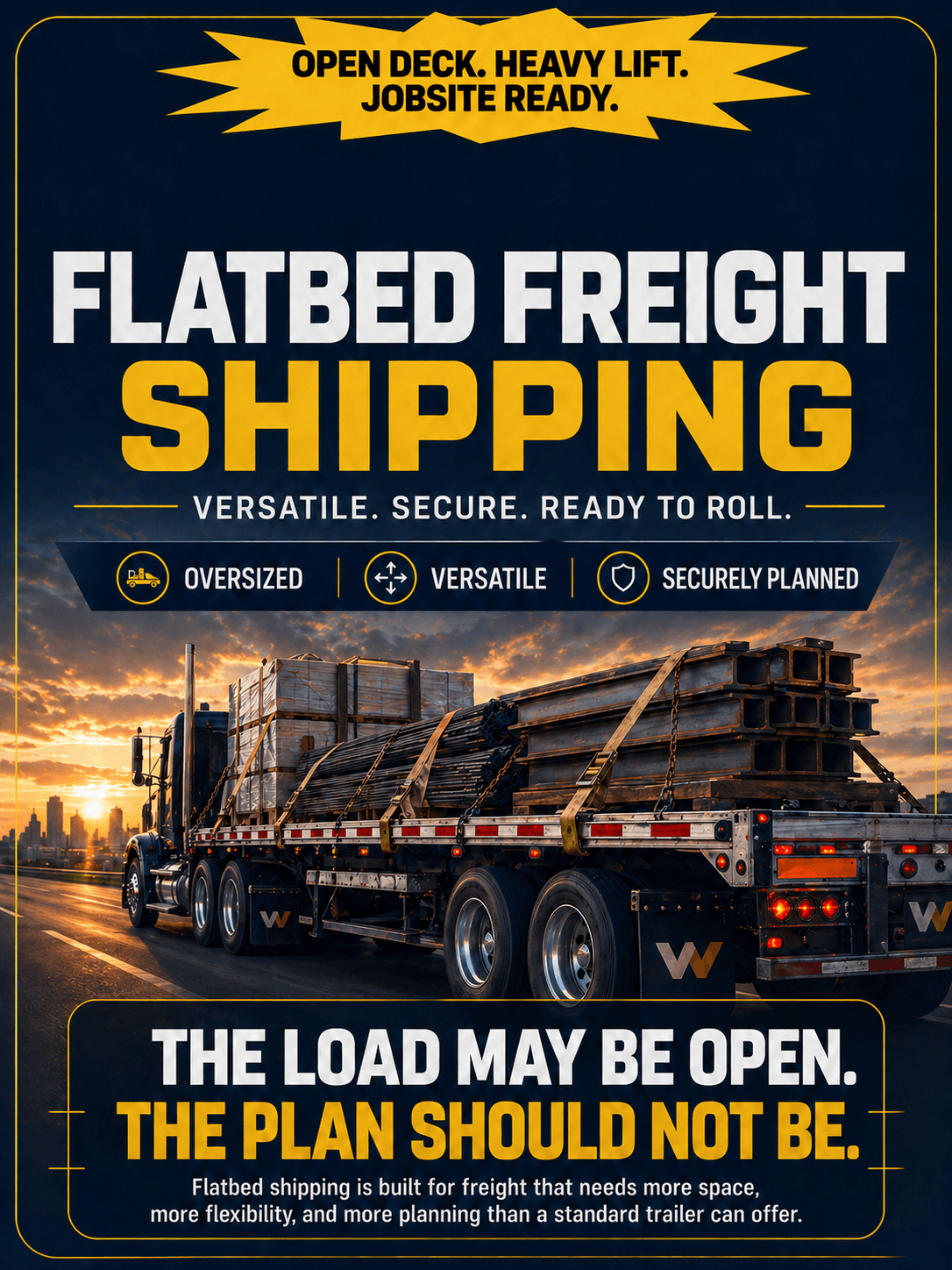
Flatbed freight shipping is used when freight cannot easily load into a standard enclosed trailer, needs crane or forklift access, is too long or tall for a van, or requires open-deck equipment. It is commonly used for construction materials, steel, pipe, lumber, machinery, equipment, and oversized freight.
Open-deck freight
Flatbeds are built for freight that needs side, top, or crane loading and does not fit well in a standard dry van.
- Steel, pipe, and lumber
- Machinery and equipment
- Building materials
Securement matters
Flatbed loads need proper straps, chains, blocking, bracing, weight distribution, and carrier experience.
- Strap and chain awareness
- Tarping needs reviewed
- Load details confirmed
Site details count
Pickup and delivery conditions can make or break a flatbed move, especially at jobsites, yards, and industrial locations.
- Loading method
- Appointment requirements
- Access and unloading details
When it makes sense
When the freight does not belong behind closed doors.
Flatbed shipping can be the right call when freight is oversized, awkward, heavy, long, crane-loaded, forklift-loaded from the side, or heading to a site where enclosed trailer access just does not work. It gives shippers flexibility, but that flexibility needs planning.
Confirm the freight
We review dimensions, weight, commodity, packaging, loading method, unloading method, and whether tarps or special securement may be needed.
Choose the right equipment
Flatbed, step deck, extendable, conestoga, or another specialized option may be needed depending on the freight and site conditions.
Match carrier experience
Open-deck freight needs carriers who understand securement, tarping, weight distribution, and the realities of loading and unloading.
Review site requirements
Hours, appointments, jobsite access, forklifts, cranes, dock access, and contact details need to be clear before arrival.
Communicate through delivery
Flatbed shipments often involve more moving pieces. We help keep the updates moving so the plan does not disappear into the fog.
Equipment options
Flatbed vs step deck vs specialized.
The right equipment depends on the freight. A flatbed is flexible, but not every open-deck shipment belongs on the same trailer. Height, weight, length, loading method, tarping, and permits all matter.
Flatbed
Often good for standard open-deck freight such as steel, lumber, pipe, machinery, and palletized materials loaded from the side or top.
Step Deck
Often useful when freight is too tall for a standard flatbed or needs lower deck height while still using open-deck equipment.
Specialized
Conestoga, removable gooseneck, extendable trailers, permits, escorts, or other specialized solutions may be needed for complex freight.
Why Whitewater
We help keep open-deck freight from turning into open-ended problems.
Flatbed freight can be incredibly straightforward when the details are right — and wildly frustrating when they are not. We help shippers think through the freight, equipment, carrier, site, and timing before the load starts rolling.
Dimensions, weight, tarping, loading method, unloading method, site access, and timing all get attention up front.
Flatbed, step deck, conestoga, specialized equipment — the goal is to match the freight to the right option.
Open-deck freight needs reliable carriers who understand securement and communicate clearly.
From pickup through delivery, we help track the moving pieces so you are not stuck managing chaos with a clipboard and caffeine.
Common questions
Flatbed freight shipping FAQs.
What freight usually ships on a flatbed?
Common flatbed freight includes steel, lumber, pipe, construction materials, machinery, equipment, building supplies, and freight that needs side or crane loading.
When do I need a step deck instead of a flatbed?
A step deck may be needed when freight is too tall for a standard flatbed or needs a lower deck height while still requiring open-deck loading.
Do flatbed shipments need tarps?
Some do, some do not. It depends on the commodity, weather sensitivity, customer requirements, and how the freight needs to be protected.
What do you need for a flatbed quote?
Pickup and delivery locations, dimensions, weight, commodity, loading method, unloading method, tarping needs, equipment type, ready date, and any site restrictions are helpful.
Ready to move open-deck freight?
Need flatbed freight moved without the guesswork?
Send us the freight details and we’ll help determine the right equipment, carrier fit, site details, and plan to get the load moving.
West Harrison, IN 47060
