
Truckload freight shipping when the whole trailer matters.
When your freight needs the whole truck, the details still matter. Full truckload shipping can offer dedicated capacity, fewer touches, more direct movement, and better control from pickup to delivery.
Whitewater Freight helps shippers coordinate truckload freight with carrier vetting, proactive communication, tracking support, and real people making sure the plan does not disappear somewhere between “picked up” and “where is my freight?”
What it is
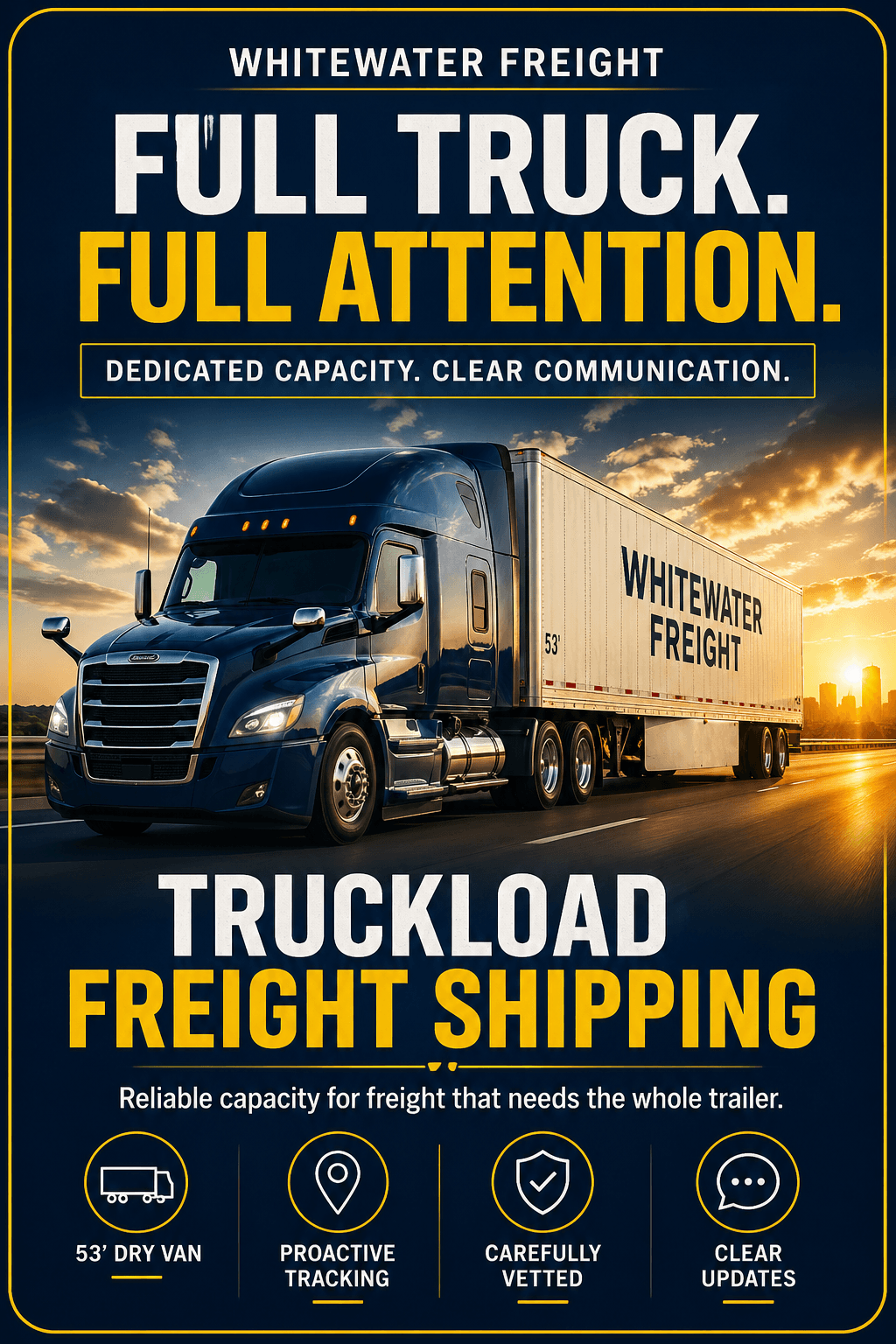
A freight option for shipments that need the whole truck.
Truckload freight shipping is used when a shipment fills or requires a dedicated trailer. It is often a strong fit for larger shipments, dry van freight, reefer freight, flatbed freight, higher-volume freight, time-sensitive moves, dedicated lanes, fewer-touch handling, and freight that benefits from direct movement.
Expedited options
Some truckload shipments need speed, dedicated movement, or urgent planning when timing gets tight.
- Time-sensitive freight
- Dedicated movement options
- Urgent load planning
Dry van truckload
Standard enclosed truckload capacity for palletized freight, packaged goods, materials, and general cargo.
- 53′ dry van options
- Dedicated trailer space
- Nationwide coverage
Reefer truckload
Temperature-controlled truckload options for freight that needs protection from heat, cold, or changing conditions.
- Temperature-sensitive freight
- Food, ingredients, and related goods
- Controlled equipment options
Direct control
Truckload can reduce handling and improve control when freight needs a more direct path from shipper to receiver.
- Fewer touches
- Direct routing
- Clearer communication
When it makes sense
When the freight deserves dedicated space.
Truckload freight often makes sense when a shipment is large enough to justify the trailer, sensitive enough to avoid extra handling, urgent enough to need more control, or consistent enough to support dedicated lanes and capacity planning.
Confirm the freight
We review commodity, weight, dimensions, pallet count, loading method, appointment needs, and whether dry van, reefer, flatbed, or another option fits best.
Match equipment
Dry van, reefer, flatbed, or specialized equipment may be needed depending on the freight, temperature needs, loading method, and delivery requirements.
Vet the carrier
Carrier quality, authority, insurance, safety, communication, and fit for the lane matter before the truck is assigned.
Plan the route and timing
Pickup windows, delivery appointments, transit expectations, driver hours, and facility requirements need to line up before wheels roll.
Track and communicate
We help monitor the shipment and communicate updates so you are not refreshing a tracking page like it owes you money.
Truckload options
Dry van vs reefer vs flatbed truckload.
Truckload is not one-size-fits-all. The right option depends on the freight, temperature needs, loading method, lane, timing, and site requirements.
Dry Van
Often best for enclosed, non-temperature-controlled freight that needs dedicated trailer space and reliable capacity.
Reefer
Used when freight needs temperature control, climate protection, or protection from extreme heat or cold.
Flatbed
Used when freight requires open-deck loading, side loading, crane loading, tarping, or specialized securement.
Why Whitewater
We help keep truckload freight moving with fewer surprises.
Full truckload freight should feel controlled, not chaotic. We help shippers think through equipment, carrier fit, timing, communication, tracking, and risk before the freight hits the road.
Truckload freight depends on the carrier doing what they said they would do. We take that seriously.
Dry van, reefer, flatbed, or specialized options all serve different shipment needs.
Updates matter before there is a problem, not only after someone starts typing in all caps.
For recurring truckload freight, dedicated lanes, or one-off moves, planning ahead helps control cost and reduce chaos.
Common questions
Truckload freight shipping FAQs.
What is truckload freight shipping?
Truckload freight shipping is used when a shipment requires a dedicated trailer, often because of size, volume, timing, handling needs, or routing requirements.
When should I use truckload instead of LTL?
Truckload may be better when freight is large, time-sensitive, fragile, high-value, needs fewer touches, or requires dedicated equipment from pickup to delivery.
What types of truckload equipment do you handle?
Whitewater Freight helps coordinate dry van, reefer, flatbed, step deck, expedited, and other truckload or specialized options depending on the shipment.
What do you need for a truckload quote?
Pickup and delivery locations, ready date, delivery deadline, commodity, weight, dimensions, pallet count, equipment type, appointment needs, and any special requirements are helpful.
Ready to move truckload freight?
Need the whole truck without the whole headache?
Send us the freight details and we’ll help determine the right equipment, carrier fit, lane plan, and communication strategy to get the load moving.
West Harrison, IN 47060
