

If you’ve ever needed to ship freight, you’ve probably run into this question pretty quickly:
“Do I need truckload or LTL?”
And usually, it comes up right when you’re already trying to get a shipment out the door.
The problem is, picking the wrong one doesn’t just create confusion—it can cost you time, money, and a few unnecessary headaches.
So let’s break it down in a way that actually helps you make the right call.
What Is Truckload Shipping?
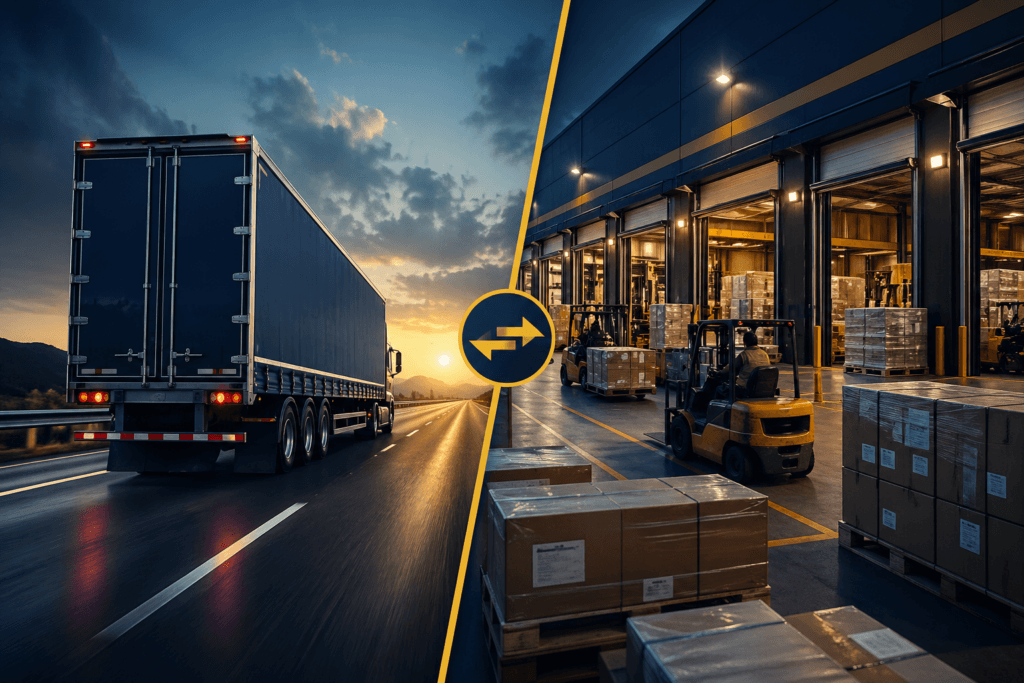
Truckload freight shipping means your shipment takes up most—or all—of a full trailer.
But more importantly, it means:
- Your freight stays on one truck from pickup to delivery
- No shared space with other shipments
- No extra handling along the way
It’s a direct, point-to-point move.
Think of it like booking a private ride instead of carpooling.
What Is LTL Shipping?
LTL (Less-Than-Truckload) shipping is used when your freight doesn’t need a full trailer.
Your shipment shares space with other shipments going in a similar direction.
That means:
- Multiple stops along the route
- Transfers between terminals
- More handling of your freight
It’s efficient—but a little more complex behind the scenes.
The Real Difference (Not Just Size)
Most people think the decision is just about how much space your freight takes up.
That’s part of it—but not the whole story.
The real differences come down to:
Speed
Truckload is typically faster because it moves direct.
LTL takes longer due to stops and transfers.
Handling
Truckload = minimal handling.
LTL = multiple touchpoints, which increases risk.
Cost Structure
LTL can be cheaper for smaller shipments.
Truckload often makes more sense as shipments get larger or more time-sensitive.
Risk
More handling = higher chance of damage or delays.
When Truckload Makes More Sense
Truckload is usually the better option when:
- Your shipment is large (typically 10+ pallets)
- You have tight delivery deadlines
- Your freight is fragile or high-value
- You want fewer variables in the process
If reliability matters more than shaving a few dollars off the rate, truckload tends to win.
When LTL Makes More Sense
LTL is a good fit when:
- Your shipment is smaller
- Your timeline is flexible
- You’re trying to control costs
That said, LTL gets tricky fast if details aren’t right.
Freight class, dimensions, and accessorials can all impact your final cost.
In some cases, a partial load shipment ends up being a better middle-ground option.
The Most Common Mistake
The biggest mistake we see?
Choosing based on price alone.
A cheaper LTL quote can quickly become expensive if:
- There are reclassification charges
- The shipment gets delayed
- The freight is damaged from extra handling
Sometimes the “cheaper” option just moves the cost somewhere else.
How Whitewater Freight Helps You Decide
At Whitewater Freight, we don’t just quote both options and leave you guessing.
We look at:
- Your timeline
- Your freight type
- Risk factors
- Total cost—not just the initial rate
Then we help you choose the option that actually fits your situation.
If you want to see the full scope of what we handle, you can explore our freight services here.
The Bottom Line
Truckload and LTL both have their place.
The key is knowing which one fits your shipment—not just which one looks cheaper at first glance.
Because in freight, the right decision upfront usually saves you from problems later.
FAQ
What is the main difference between truckload and LTL?
Truckload uses a full trailer for one shipment, while LTL combines multiple shipments into one truck.
Is LTL always cheaper than truckload?
Not always. It depends on shipment size, distance, and potential extra charges.
How many pallets is considered truckload?
Typically around 10–26 pallets, depending on size and weight.
Is LTL more likely to be damaged?
It can be, since freight is handled more frequently during transit.
Freight without the surprise party.
Need help moving freight without the surprises?
Whitewater Freight helps shippers move truckload, LTL, flatbed, hot shot, and partial loads with proactive communication, careful carrier vetting, and real humans who answer the phone.
Get a Quote