

Partial load shipping for the freight in the middle.
Some shipments are too large, too valuable, too awkward, or too time-sensitive for standard LTL — but still do not need a full truck. That is where partial load shipping can shine.
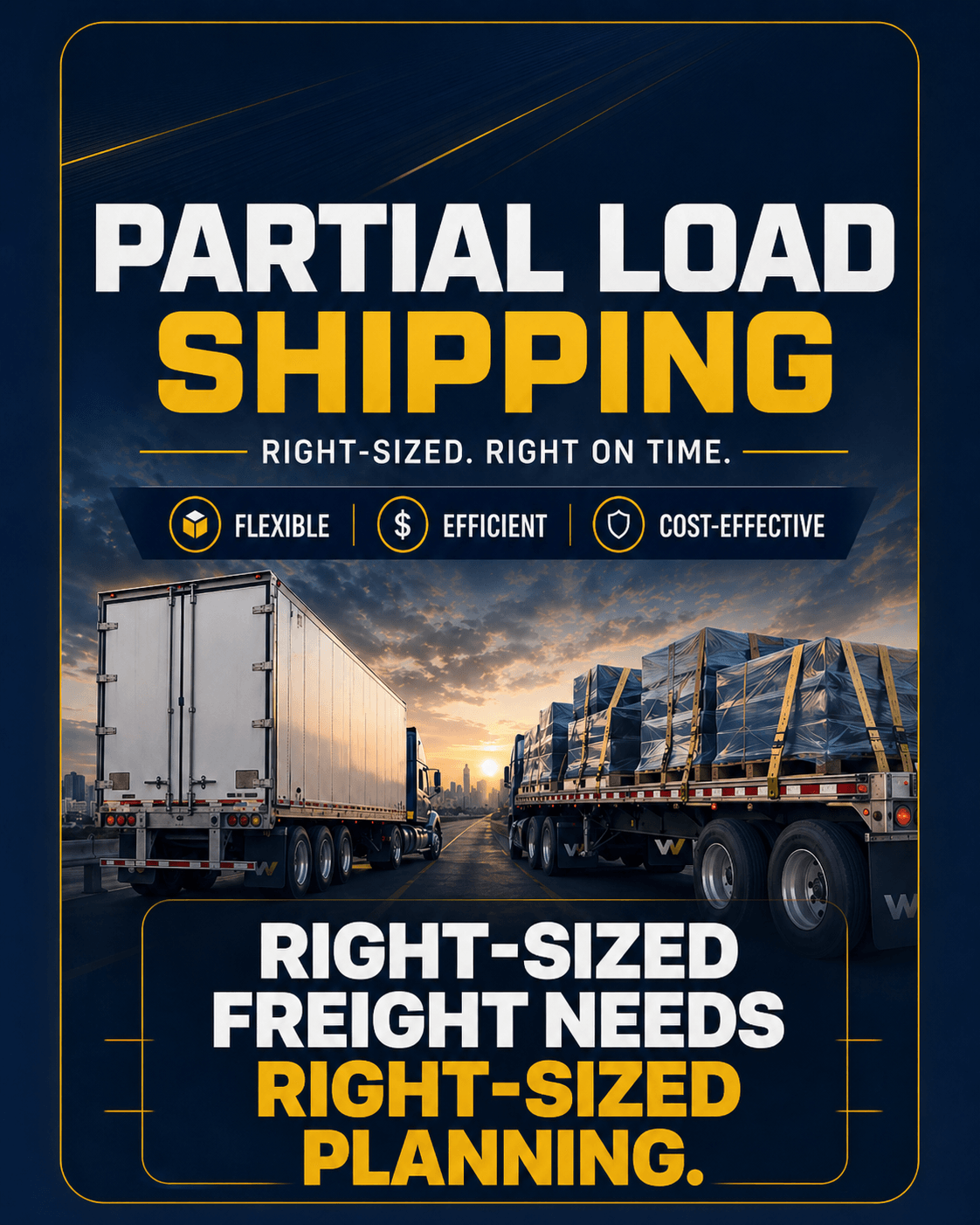
Whitewater Freight helps shippers move partial loads by matching the freight to the right equipment, whether that means dry van, flatbed, step deck, or another option that actually fits the job.
What it is
A freight option for shipments that do not fit neatly in one box.
Partial load shipping is often used when freight is larger than typical LTL, more sensitive than LTL, or does not require paying for an entire truck. It can apply to dry van freight, flatbed freight, machinery, building materials, palletized goods, long freight, and other shipments that need a more tailored transportation plan.
Dry van partials
Good for enclosed freight that needs trailer space but not necessarily the whole truck.
- Palletized freight
- Boxed or crated goods
- Shipment control without full truck cost
Flatbed partials
Useful for open-deck freight such as steel, lumber, pipe, machinery, equipment, and odd-shaped materials.
- Long or wide freight
- Jobsite materials
- Equipment and machinery
Right-sized solutions
Partial load shipping helps bridge the gap between LTL and full truckload when neither option feels quite right.
- Flexible equipment options
- Better control than standard LTL
- Potential cost savings vs full truckload
When it makes sense
Sometimes the best answer is not the biggest truck or the cheapest lane.
Partial load shipping can be a strong fit when standard LTL feels too risky or limited, but a full truckload feels like overkill. It is especially useful when freight needs specific handling, open-deck equipment, better timing, fewer handoffs, or a more direct plan.
Understand the freight
We review dimensions, weight, commodity, packaging, loading needs, delivery requirements, and whether the freight needs van, flatbed, step deck, or something else.
Choose the right direction
Sometimes LTL is fine. Sometimes partial is better. Sometimes full truckload is the safest choice. We help sort the smartest path.
Match equipment and carrier
Van partials and flatbed partials are not the same game. Equipment, securement, loading method, and carrier experience all matter.
Confirm the details
Pickup, delivery, appointments, loading hours, tarping needs, driver requirements, and site conditions get checked before wheels roll.
Communicate through delivery
We help keep the shipment visible and the communication moving, because “I think it is fine” is not a tracking strategy.
The middle ground
LTL vs partial load vs truckload.
Every shipment deserves the right fit. The cheapest option up front is not always the cheapest option after delays, damage risk, rework, or surprise charges join the chat.
LTL
Often good for smaller palletized freight that can move through a shared network with multiple stops and terminal handling.
Partial Load
Often good when freight needs more space, better control, fewer touches, special equipment, or a more tailored carrier plan.
Truckload
Often best when the freight requires the whole trailer, dedicated capacity, direct movement, or tighter control from pickup to delivery.
Why Whitewater
We help find the option that actually fits the freight.
Partial load shipping is not one-size-fits-all. The right answer depends on the freight, the equipment, the lane, the delivery requirements, the carrier, and the risk tolerance. We help shippers think through the details before the freight becomes a problem with a tracking number.
Enclosed freight and open-deck freight have different needs. We do not pretend they are the same thing with different tires.
Dimensions, loading needs, securement, tarping, appointments, access, and delivery conditions matter.
Just because freight can move a certain way does not mean it should. That distinction saves headaches.
When freight is in the gray area between modes, having a real person think it through is not a luxury. It is the whole ballgame.
Common questions
Partial load shipping FAQs.
What is partial load shipping?
Partial load shipping is used when freight does not require a full truck but may need more space, control, or flexibility than standard LTL.
Can partial loads move on flatbeds?
Yes. Partial loads can move on dry vans, flatbeds, step decks, and other equipment depending on the freight, dimensions, securement needs, and loading requirements.
When is partial load better than LTL?
Partial may be better when freight is large, awkward, valuable, sensitive, open-deck, time-sensitive, or better served by fewer handoffs and more direct planning.
What do you need for a quote?
Pickup and delivery locations, ready date, delivery deadline, dimensions, weight, commodity, equipment type, loading method, and any special requirements are helpful.
Ready to right-size the move?
Need partial freight moved without the guesswork?
Send us the freight details and we’ll help determine whether partial load, expedited shipping, LTL, flatbed, van, or full truckload makes the most sense.
West Harrison, IN 47060
