
Retail Freight Shipping: Why Consistency Matters in Retail Logistics
Retail freight shipping is not just about moving products.
It is about keeping shelves stocked, inventory flowing, and delivery schedules predictable.
And in retail logistics, consistency matters more than most people realize.
Because when shipments are delayed, the effects usually spread quickly through inventory planning, store operations, and customer expectations.
Retail Freight Shipping Depends on Timing
Retail operations often work around strict schedules.
Distribution centers, warehouses, and stores all depend on freight arriving when expected.
Late shipments can create:
- Inventory shortages
- Stocking delays
- Operational disruptions
- Customer frustration
That is why retail freight shipping requires reliable coordination from pickup to delivery.
Retail Logistics Often Uses Multiple Shipping Types
Retail freight shipping rarely relies on a single transportation method.
Depending on shipment size and urgency, retail companies may use:
- Truckload freight shipping for larger inventory moves
- LTL freight shipping for smaller shipments
- Partial load shipping for mid-sized freight
- Hot shot shipping for urgent inventory needs
The right shipping strategy depends on inventory demands, timing requirements, and operational flexibility.
Communication Prevents Retail Freight Problems
Retail logistics moves quickly.
Schedules change, inventory shifts, and delivery priorities evolve constantly.
That is why communication matters throughout the shipment process.
Clear updates and shipment visibility help reduce:
- Missed delivery windows
- Receiving issues
- Inventory confusion
- Unexpected delays
Small communication gaps can become expensive very quickly in retail environments.
Carrier Reliability Matters in Retail Freight Shipping
Retail freight shipping depends heavily on consistency.
Reliable carriers should be:
- Properly vetted
- Communicative
- Consistent with scheduling
- Capable of handling retail delivery requirements
This is also why carrier vetting and freight fraud prevention play an important role in modern retail logistics.
Companies can also review transportation safety information through the Federal Motor Carrier Safety Administration (FMCSA).
How Whitewater Freight Helps with Retail Freight Shipping
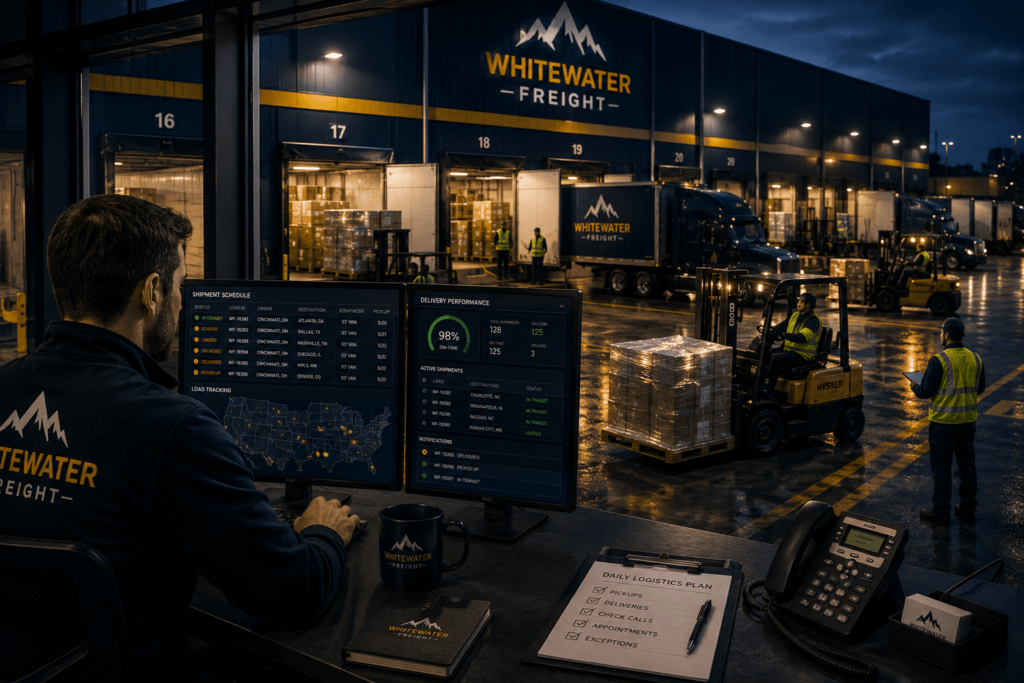
At Whitewater Freight, we help retail companies coordinate freight with practical planning and proactive communication.
That includes:
- Shipment coordination
- Carrier selection
- Delivery scheduling support
- Shipment visibility and updates
- Matching the right shipping solution to the freight
We understand that retail freight shipping is about more than transportation.
It is about supporting inventory flow and operational consistency.
You can review our broader freight services or explore the industries we serve.
The Bottom Line
Retail freight shipping depends on timing, visibility, and reliability throughout the supply chain.
When logistics runs consistently, inventory planning becomes easier and operations tend to run much more smoothly.
Because in retail logistics, consistency is usually what keeps everything moving.
FAQ
What is retail freight shipping?
Retail freight shipping involves transporting products between suppliers, warehouses, distribution centers, and retail locations.
Why is timing important in retail logistics?
Because inventory shortages and delayed deliveries can affect store operations and customer expectations.
What shipping methods are common in retail freight?
Truckload, LTL, partial load, and expedited shipping are all commonly used in retail logistics.
How can retail companies reduce shipping disruptions?
By improving communication, planning shipments carefully, and working with reliable logistics partners.
Freight without the surprise party.
Need help moving freight without the surprises?
Whitewater Freight helps shippers move truckload, LTL, flatbed, hot shot, and partial loads with proactive communication, careful carrier vetting, and real humans who answer the phone.
Get a Quote