

Freight fraud prevention before the load moves.
Freight fraud is not a plot twist anyone ordered. Double brokering, fake identities, bad contact information, unauthorized pickups, and questionable carrier activity can turn a normal shipment into a very expensive headache.
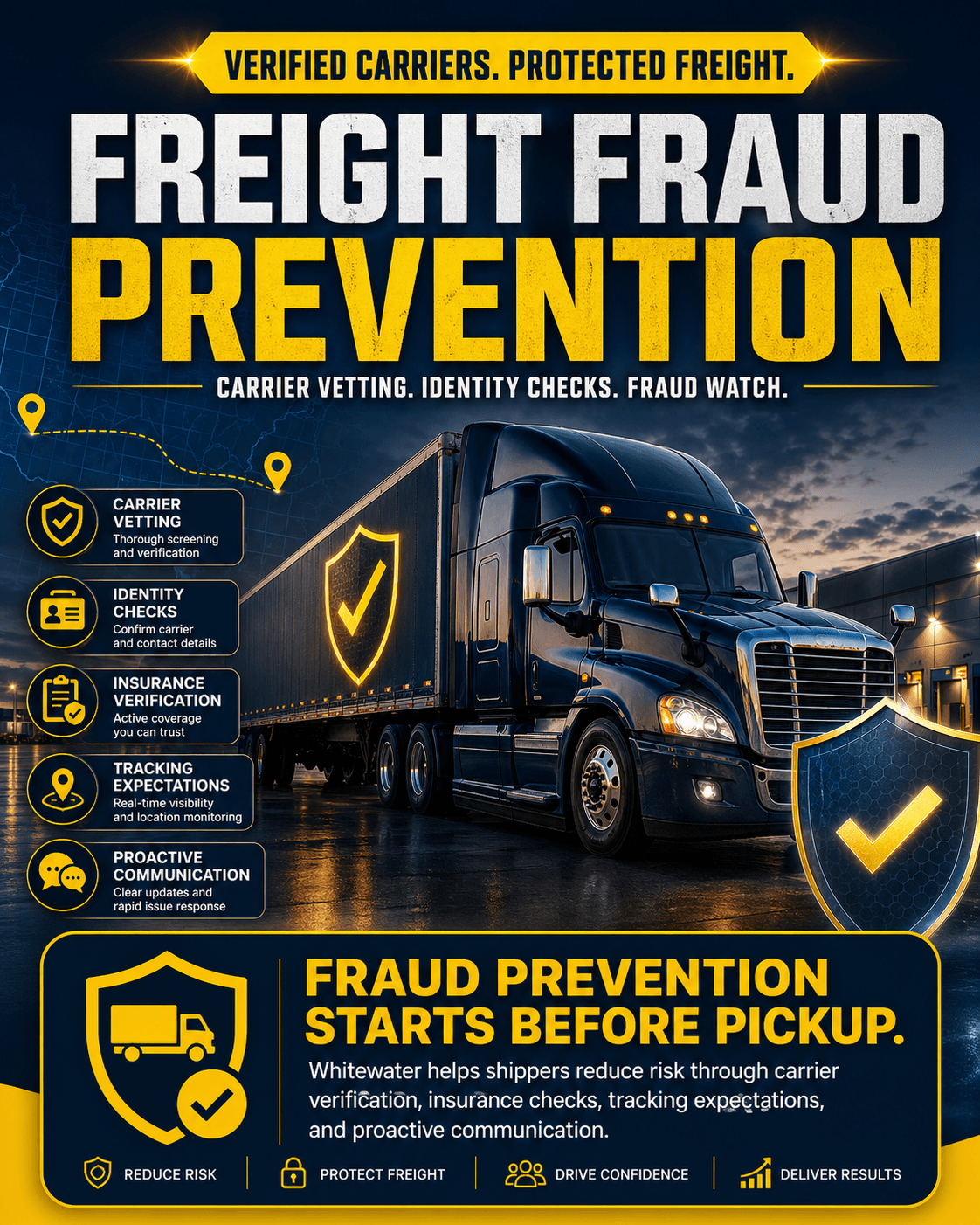
Whitewater Freight helps shippers reduce risk with carrier vetting, identity checks, insurance awareness, tracking expectations, and proactive communication before the freight ever leaves the dock.
What it is
Freight fraud prevention is a process, not a checkbox.
Freight fraud prevention means reviewing carrier information, watching for red flags, confirming identity, checking authority and insurance, setting tracking expectations, and communicating clearly with the parties involved. In today’s freight market, “looks fine” is not a strategy. That’s how the chaos gremlins get in.
Carrier vetting
We review carrier details before assigning freight, because the wrong truck can create the right conditions for fraud.
- Authority awareness
- Insurance review
- Safety and activity checks
Identity checks
Carrier names, contact details, paperwork, email patterns, phone numbers, and pickup behavior all deserve attention.
- Contact verification
- Document review
- Pickup confirmation
Tracking expectations
Visibility matters. When freight is moving, tracking and communication help confirm that the shipment is where it should be.
- Location visibility
- Shipment updates
- Exception monitoring
Why it matters
The cheapest option can get expensive fast if it is the wrong carrier.
Freight fraud can lead to stolen shipments, delayed freight, insurance complications, claims headaches, customer disruption, and a whole lot of “how did this happen?” energy. Prevention is about slowing down just enough to make sure the freight is going to the right place with the right carrier.
Review carrier identity
Carrier name, MC/DOT details, contact information, email patterns, phone numbers, and documentation are reviewed for consistency and red flags.
Check authority and insurance
Active authority, insurance status, and carrier details matter before assigning freight. It is much easier to prevent a problem than chase one later.
Confirm pickup details
Pickup instructions, appointment times, facility contacts, driver/carrier details, and release procedures should match the plan.
Set tracking expectations
Tracking and communication help confirm the shipment is moving as expected and give everyone a faster way to catch issues.
Monitor for exceptions
If something feels off, we would rather ask the extra question than pretend the freight industry has never surprised anyone. Spoiler: it has.
Common red flags
Things that deserve a second look.
Not every red flag means fraud. But every red flag deserves attention. The goal is not paranoia. The goal is disciplined caution, because freight is too valuable for “eh, probably fine.”
Identity mismatch
Carrier names, emails, phone numbers, documents, and pickup details should tell the same story. If they do not, pause.
Tracking resistance
If tracking is required and there is pushback, delay, or confusion, that deserves attention before freight is released.
Pressure tactics
Urgency, last-minute changes, odd communication patterns, or unusual requests can be signs that something needs more verification.
Why Whitewater
We treat fraud prevention like part of the shipment, not an optional add-on.
Moving freight is the obvious part. Protecting the freight, the shipper, the receiver, and the relationship is the part that really matters. Whitewater Freight brings people, process, and attention to the details that help reduce freight fraud risk.
Carrier information, pickup details, tracking expectations, and contact verification are worth the time.
Fraud prevention means noticing behavior, communication, timing, and inconsistencies — not just collecting documents.
Clear communication helps avoid confusion at pickup, during transit, and at delivery.
Because it does. That should not be a revolutionary business philosophy, but here we are.
Common questions
Freight fraud prevention FAQs.
What is freight fraud?
Freight fraud can include double brokering, identity misrepresentation, unauthorized pickups, stolen shipments, fake carrier activity, or other deceptive actions involving freight movement.
What is carrier vetting?
Carrier vetting is the process of reviewing carrier authority, insurance, safety, identity, contact information, activity, and other details before trusting them with a shipment.
Can freight fraud be completely eliminated?
No process can guarantee that fraud will never happen, but disciplined carrier vetting, communication, tracking, and verification can help reduce risk.
Why use a broker for fraud prevention?
A strong freight broker helps manage carrier sourcing, verification, documentation, tracking expectations, communication, and escalation when something feels off.
Ready to move freight with more confidence?
Protect your freight before the pickup.
Send us the shipment details and we’ll help coordinate the move with carrier vetting, communication, tracking expectations, and a real plan before freight changes hands.
West Harrison, IN 47060
