

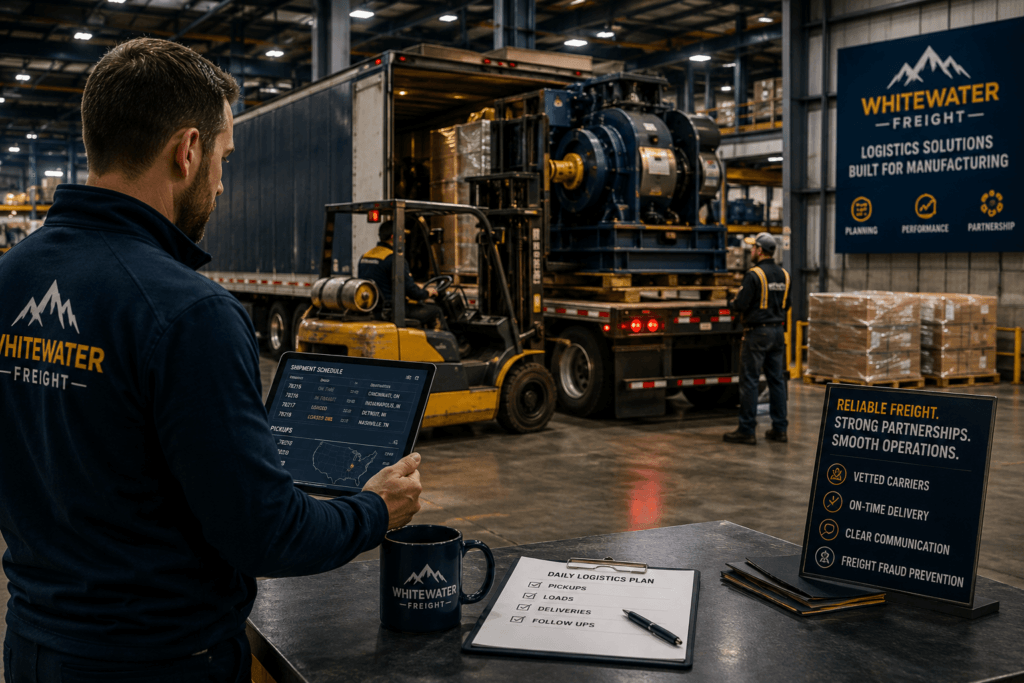
Manufacturing Freight Shipping: What Manufacturers Need from a Logistics Partner
In manufacturing, timing is not just important—it affects everything.
One delayed shipment can slow production, push deadlines, create overtime, and frustrate customers all at once.
That is why manufacturing freight shipping is about much more than simply finding a truck.
It is about reliability, planning, communication, and keeping operations moving.
Manufacturing Freight Is Different
Manufacturing freight tends to be more time-sensitive than many other shipping environments.
Raw materials, components, machinery, finished products—everything is connected to production schedules.
When one piece is delayed, the impact spreads quickly.
That means logistics needs to support operations—not create more uncertainty.
Why Consistency Matters More Than “Cheap”
Manufacturers usually are not looking for drama.
They want:
- Reliable pickups
- Accurate delivery windows
- Clear communication
- Fewer surprises
A low freight rate does not help much if the shipment arrives late and slows production.
That is why consistency often matters more than chasing the absolute cheapest option.
Different Freight Types Often Work Together
Manufacturing companies rarely use just one shipping method.
Depending on the situation, they may need:
- Truckload freight shipping for larger production shipments
- LTL shipping for smaller or recurring freight
- Hot shot shipping for urgent parts or downtime situations
- Flatbed shipping for machinery, steel, or oversized freight
The right solution depends on the freight, timing, and operational impact.
Communication Is Critical
Manufacturing environments move quickly.
Schedules change. Priorities shift. Production needs evolve.
Good logistics support means adapting quickly while keeping everyone informed.
Poor communication creates delays long before the truck arrives.
That is why proactive updates and clear coordination matter so much in manufacturing freight.
Carrier Reliability Matters
Not every carrier is a good fit for manufacturing freight.
Reliable carriers should be:
- Consistent
- Properly vetted
- Responsive
- Capable of handling the shipment type
This is especially important for high-value materials, production-critical parts, and scheduled deliveries.
If you want to understand how we approach that process, you can review our page on freight fraud prevention and carrier vetting.
The Cost of Delays Is Bigger Than Freight
Manufacturing delays usually affect more than transportation.
They can impact:
- Production schedules
- Labor costs
- Customer deadlines
- Inventory planning
That is why logistics planning should support operational stability—not just shipment movement.
How Whitewater Freight Helps Manufacturers
At Whitewater Freight, we work with manufacturers who need practical logistics support and real communication.
That includes:
- Matching the right freight solution
- Careful carrier selection
- Proactive communication during transit
- Planning around operational needs
You can explore the industries we support on our industries we serve page or review our broader freight services.
The Bottom Line
Manufacturing freight shipping is not just about transportation.
It is about keeping production moving.
And when logistics is handled well, everything downstream tends to run smoother too.
FAQ
What types of freight do manufacturers ship?
Manufacturers commonly ship raw materials, machinery, components, finished goods, and production-critical parts.
Why is logistics important in manufacturing?
Because delays can disrupt production schedules, labor planning, and customer deliveries.
What freight services do manufacturers commonly use?
Truckload, LTL, flatbed, hot shot, and specialized freight services are all common in manufacturing logistics.
How can manufacturers reduce shipping delays?
By working with reliable logistics partners, planning ahead, and maintaining clear communication throughout the shipment process.
Freight without the surprise party.
Need help moving freight without the surprises?
Whitewater Freight helps shippers move truckload, LTL, flatbed, hot shot, and partial loads with proactive communication, careful carrier vetting, and real humans who answer the phone.
Get a Quote