
Industrial Equipment Shipping: Why Specialized Freight Planning Matters
Industrial equipment shipping usually comes with higher stakes than standard freight.
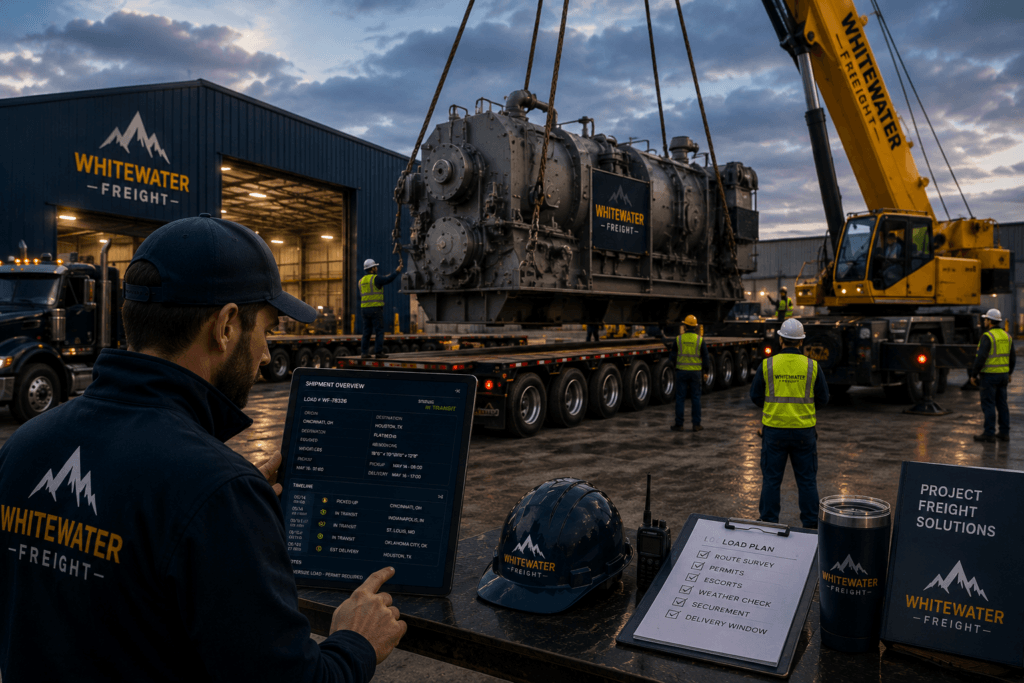
Large machinery, specialized equipment, oversized dimensions, and operational deadlines all create additional complexity throughout the shipment process.
That is why industrial equipment shipping requires more than simply arranging transportation.
It requires planning, coordination, communication, and the right equipment from the start.
Industrial Equipment Shipping Often Involves Specialized Freight
Industrial freight is rarely one-size-fits-all.
Different types of machinery and equipment may require:
- Flatbed transportation
- Oversized load coordination
- Specialized securement
- Project-based scheduling
- Multi-stage delivery planning
That creates a greater need for visibility and freight coordination throughout the shipment.
Proper Equipment Selection Matters
Choosing the right trailer and transportation method is one of the most important parts of industrial equipment shipping.
Depending on dimensions and handling requirements, shipments may involve:
- Flatbed freight shipping
- Truckload freight shipping
- Partial load shipping
- Hot shot shipping for urgent parts or equipment
The right solution depends on size, timing, loading requirements, and delivery conditions.
Timing Impacts Operations
Industrial equipment shipments are often connected directly to operations, production schedules, or project timelines.
Delays may impact:
- Installation schedules
- Production timelines
- Labor coordination
- Project completion dates
That is why communication and shipment visibility matter throughout transit.
Carrier Vetting Is Important for Industrial Freight
Industrial equipment shipping requires reliable transportation partners.
Carriers should be:
- Properly vetted
- Experienced with specialized freight
- Capable of handling oversized or sensitive equipment
- Responsive throughout the shipment process
This is also why freight fraud prevention and carrier vetting play such an important role in industrial logistics.
Companies can also review transportation safety guidance through the Federal Motor Carrier Safety Administration (FMCSA).
How Whitewater Freight Helps with Industrial Equipment Shipping
At Whitewater Freight, we help companies coordinate industrial equipment shipping with practical planning and proactive communication.
That includes:
- Specialized freight coordination
- Carrier selection and vetting
- Shipment visibility and updates
- Scheduling support
- Matching the right transportation solution to the freight
We understand that industrial equipment shipping is about more than transportation.
It is about protecting operations, timelines, and project coordination throughout the shipment process.
You can review our broader freight services or explore the industries we serve.
The Bottom Line
Industrial equipment shipping requires planning, visibility, specialized coordination, and reliable transportation support.
When complex freight is coordinated properly, operations tend to run more smoothly and costly disruptions become easier to avoid.
Because with industrial freight, the details matter from the very beginning.
FAQ
What is industrial equipment shipping?
Industrial equipment shipping involves transporting machinery, oversized equipment, and specialized industrial freight.
What trailers are commonly used for industrial freight?
Flatbeds, step decks, specialized trailers, and standard truckload trailers are all commonly used depending on the freight.
Why is specialized freight planning important?
Because industrial equipment often involves unique handling, timing, and transportation requirements.
How can companies reduce industrial freight delays?
By improving communication, planning shipments carefully, and working with experienced logistics partners.
Freight without the surprise party.
Need help moving freight without the surprises?
Whitewater Freight helps shippers move truckload, LTL, flatbed, hot shot, and partial loads with proactive communication, careful carrier vetting, and real humans who answer the phone.
Get a Quote