

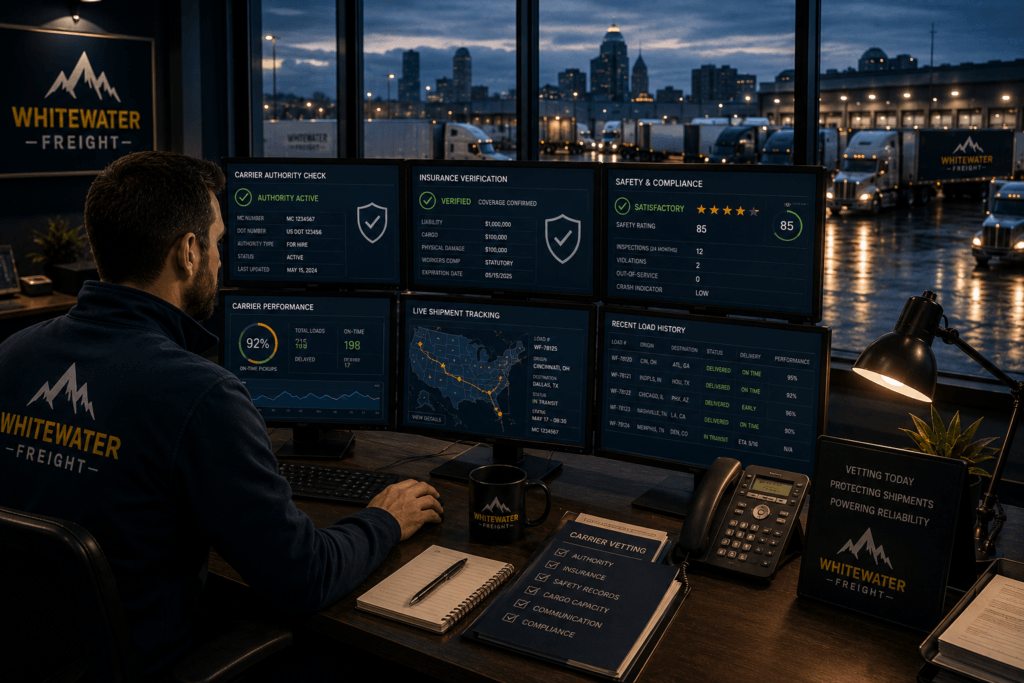
Freight Carrier Vetting: What Shippers Should Actually Look For
Finding a truck is easy.
Finding the right carrier is where things get more important.
Freight carrier vetting helps reduce risk before a shipment ever moves. And in today’s logistics environment, that matters more than ever.
Because the wrong carrier decision can lead to delays, communication problems, cargo claims, fraud issues, or operational disruptions that cost far more than the original freight rate.
Freight Carrier Vetting Is About More Than Insurance
A lot of people assume carrier vetting simply means checking whether a company has active insurance.
Insurance matters, of course. But effective freight carrier vetting goes much deeper than that.
Reliable transportation partners should also be evaluated for:
- Safety history
- Authority status
- Inspection records
- Communication consistency
- Operational reliability
Good logistics planning starts with understanding who is actually handling the shipment.
Why Carrier Vetting Matters More Than Ever
Freight fraud and carrier impersonation have become much larger concerns across the transportation industry.
Bad actors often target shipments by using fake identities, stolen carrier information, or fraudulent dispatch practices.
That is why proper freight fraud prevention and ongoing carrier monitoring are critical parts of modern freight carrier vetting.
Companies can also review carrier safety and authority information through the FMCSA SAFER System.
Communication Is Part of Carrier Reliability
Carrier vetting is not only about paperwork.
Communication matters too.
Reliable carriers should be:
- Responsive during transit
- Clear with scheduling updates
- Consistent with pickup and delivery communication
- Able to provide accurate shipment visibility
Many freight problems begin with communication gaps long before the shipment is delayed.
Different Freight Types Require Different Carrier Experience
Not every carrier is the right fit for every shipment.
For example:
- Flatbed freight shipping requires securement and specialized handling experience
- Hot shot shipping often requires urgent coordination and flexibility
- LTL freight shipping involves additional handling and terminal coordination
- Truckload freight shipping may involve high-value or time-sensitive freight
Matching the right carrier to the freight helps reduce avoidable operational problems.
Carrier Vetting Helps Reduce Freight Delays
Reliable carriers are usually more consistent with:
- Pickup scheduling
- Delivery timing
- Communication updates
- Shipment handling
That consistency helps reduce delays and operational disruptions throughout the shipment process.
Because in logistics, reliability tends to solve problems before they happen.
How Whitewater Freight Approaches Freight Carrier Vetting
At Whitewater Freight, freight carrier vetting is treated as an ongoing process—not a one-time checkbox.
That includes:
- Reviewing carrier authority and insurance
- Monitoring safety information
- Evaluating operational reliability
- Supporting shipment visibility and communication
- Watching for potential fraud risks
We understand that freight carrier vetting is about protecting more than cargo.
It is about protecting schedules, operations, customer relationships, and trust.
You can review our broader freight services or request a freight quote for upcoming shipments.
The Bottom Line
Freight carrier vetting plays a major role in reducing transportation risk.
Reliable carriers, proactive communication, and ongoing verification all help create smoother freight operations.
Because the best logistics problems are usually the ones prevented before the truck ever moves.
FAQ
What is freight carrier vetting?
Freight carrier vetting is the process of reviewing and verifying transportation providers before assigning shipments.
Why is carrier vetting important?
It helps reduce fraud risk, delays, communication problems, and operational disruptions.
What should companies check when vetting carriers?
Authority status, insurance, safety records, communication reliability, and operational experience.
How does carrier vetting reduce freight problems?
Reliable and properly vetted carriers are generally more consistent with scheduling, communication, and shipment handling.
Freight without the surprise party.
Need help moving freight without the surprises?
Whitewater Freight helps shippers move truckload, LTL, flatbed, hot shot, and partial loads with proactive communication, careful carrier vetting, and real humans who answer the phone.
Get a Quote