

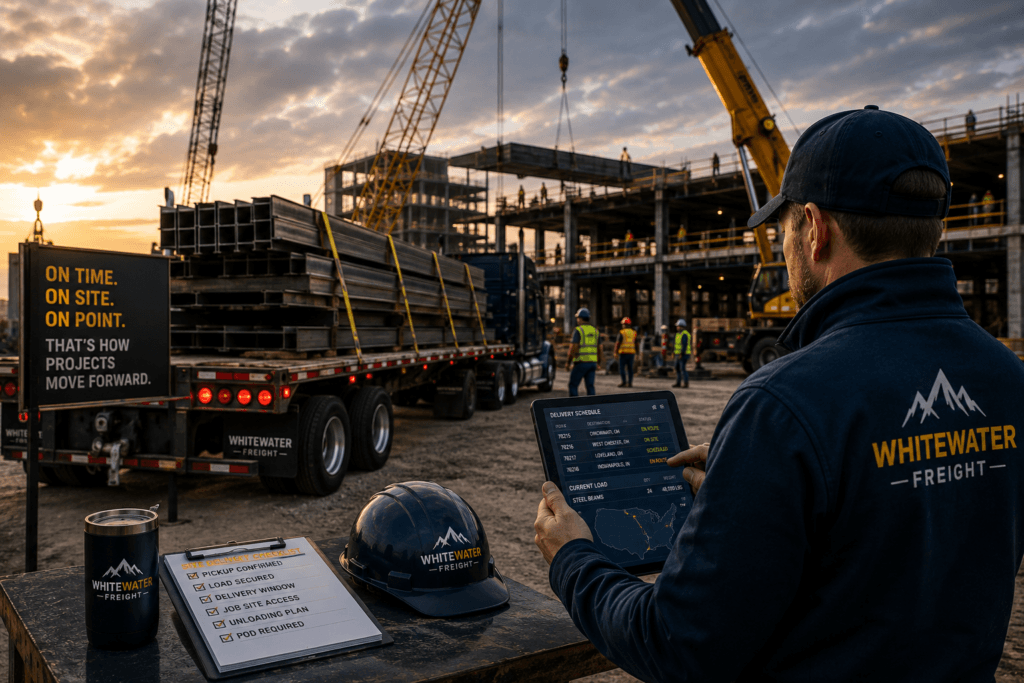
Construction Freight Shipping: Why Timing and Coordination Matter
Construction projects run on schedules.
And when freight misses the schedule, everything behind it starts shifting too.
Crews wait. Equipment sits. Deadlines move. Stress levels rise dramatically.
Construction freight shipping is not just about transportation—it is about coordination.
And in a lot of cases, timing matters just as much as the freight itself.
Construction Freight Comes with Different Challenges
Construction logistics is rarely simple.
Job sites change constantly. Delivery windows shift. Access can be limited. Equipment and materials vary from one shipment to the next.
That means freight planning needs to be flexible while still staying organized.
Flatbed Freight Is Often Part of the Equation
Many construction shipments require flatbed freight shipping because of size, weight, or loading requirements.
This commonly includes:
- Steel and structural materials
- Lumber and building products
- Machinery and oversized equipment
- Palletized project materials
Flatbed shipping allows freight to be loaded from multiple angles and secured properly for transport.
Job Site Deliveries Require Coordination
Construction deliveries are different from warehouse deliveries.
Many job sites have:
- Limited unloading space
- Restricted access hours
- Equipment requirements
- Changing site conditions
A truck arriving at the wrong time can create real problems onsite.
That is why communication and scheduling matter so much.
Timing Impacts More Than Transportation
In construction, freight delays affect more than shipping.
They can impact:
- Labor scheduling
- Equipment rentals
- Project sequencing
- Customer timelines
A delayed shipment may create a much larger operational delay behind it.
Urgent Freight Happens More Often Than People Think
Construction projects change quickly.
Materials get damaged. Quantities shift. Timelines compress.
That is why expedited and hot shot shipping solutions are often part of construction logistics planning.
Sometimes the priority is not efficiency—it is keeping the project moving.
Carrier Reliability Matters
Construction freight often involves:
- High-value materials
- Oversized freight
- Time-sensitive deliveries
That makes carrier selection important.
Reliable carriers should be properly vetted, experienced with construction freight, and capable of handling the specific delivery environment.
If you want to understand how we approach that side of logistics, you can review our page on freight fraud prevention and carrier vetting.
How Whitewater Freight Helps Construction Companies
At Whitewater Freight, we help construction companies coordinate freight with real-world project demands in mind.
That includes:
- Flatbed and specialized freight planning
- Job site coordination
- Carrier vetting and scheduling
- Communication throughout the shipment process
You can explore the industries we support on our industries we serve page or review our broader freight services.
The Bottom Line
Construction freight shipping is about more than moving materials from Point A to Point B.
It is about supporting project flow, timing, and coordination.
When logistics runs smoothly, projects usually do too.
FAQ
What types of freight are common in construction logistics?
Construction freight commonly includes steel, lumber, machinery, building materials, and oversized equipment.
Why is flatbed shipping used in construction?
Because many materials and machines cannot fit inside standard enclosed trailers.
What challenges exist with job site deliveries?
Limited access, changing schedules, restricted unloading areas, and coordination requirements.
Can construction freight be expedited?
Yes. Hot shot and expedited freight services are commonly used for urgent project needs.
Freight without the surprise party.
Need help moving freight without the surprises?
Whitewater Freight helps shippers move truckload, LTL, flatbed, hot shot, and partial loads with proactive communication, careful carrier vetting, and real humans who answer the phone.
Get a Quote