

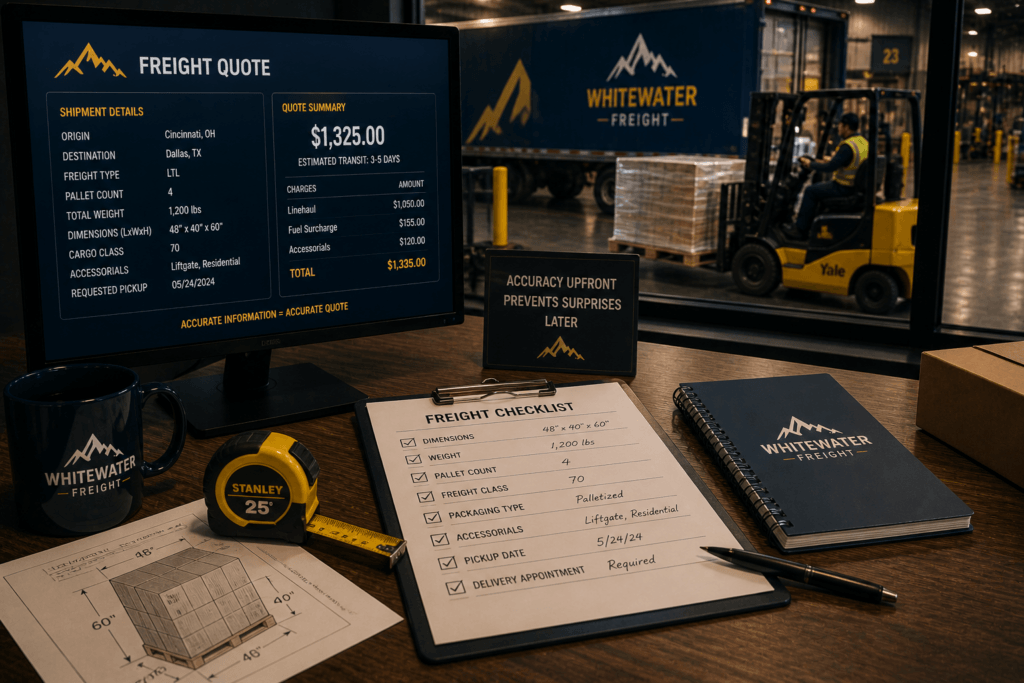
How to Prepare Freight for a Better Quote
If you’ve ever requested a freight quote and thought, “Why did the price change later?”—you’re not alone.
In most cases, it’s not random.
It comes down to how the freight was prepared and described upfront.
A good quote starts with good information. And the more accurate your details are, the fewer surprises you’ll deal with later.
Let’s walk through what actually matters when preparing your freight.
Why Preparation Matters More Than You Think
Freight pricing isn’t just based on distance.
It’s based on:
- Size
- Weight
- Handling requirements
- Risk factors
If any of those are off, even slightly, it can lead to:
- Reclassification charges
- Additional fees
- Delays at pickup or delivery
That’s why accuracy upfront saves time and money later.
Start with Accurate Dimensions
This is one of the most common issues in freight.
“Rough estimates” might work in conversation—but not in logistics.
You’ll want to provide:
- Length, width, and height of each pallet or piece
- Total pallet count
Even a few inches off can impact pricing—especially in LTL shipping, where density plays a major role.
Weight Isn’t Optional (And It Needs to Be Right)
Total weight matters—but so does how that weight is distributed.
If the weight is incorrect:
- Carriers may reweigh the shipment
- Additional charges can be applied
- Delays can happen at terminals
It’s always better to be precise than optimistic here.
Know How Your Freight Is Packaged
How your freight is packaged affects how it’s handled.
Carriers need to know if your shipment is:
- Palletized
- Crated
- Loose or floor-loaded
This helps determine whether the freight can move efficiently—or if it requires special handling.
Don’t Forget Accessorials
Accessorials are the extra services that often get missed.
These include things like:
- Liftgate service
- Residential delivery
- Limited access locations
- Appointment requirements
If these aren’t included upfront, they usually show up later as additional charges.
Choose the Right Shipping Type
Not every shipment fits neatly into one category.
Depending on size and urgency, you may be choosing between:
Each option has different pricing structures and handling requirements.
Choosing the right one upfront makes the quote more accurate—and the shipment smoother.
The Most Common Mistake
The biggest issue we see?
Incomplete information.
It’s usually not intentional—just rushed.
But missing details are what cause quotes to change later.
And that’s where frustration starts.
How Whitewater Freight Helps
At Whitewater Freight, we don’t just take the information and send a number back.
We help make sure everything is accurate before the shipment moves.
That includes:
- Reviewing shipment details
- Confirming dimensions and weight
- Identifying potential accessorials
- Matching the right shipping method
If you want to see how this fits into the bigger picture, you can explore our full range of freight services.
The Bottom Line
A good freight quote isn’t just about price.
It’s about accuracy.
The more complete your information is upfront, the smoother everything goes afterward.
And in freight, smooth is usually what saves you the most.
FAQ
What information is needed for a freight quote?
Dimensions, weight, pallet count, pickup and delivery locations, and any special requirements.
Why do freight quotes change?
Usually due to inaccurate or incomplete shipment details provided initially.
What are accessorial charges?
Additional services like liftgates, residential delivery, or appointments that add to the cost.
How can I avoid extra freight charges?
By providing accurate dimensions, weight, and full shipment details upfront.
Freight without the surprise party.
Need help moving freight without the surprises?
Whitewater Freight helps shippers move truckload, LTL, flatbed, hot shot, and partial loads with proactive communication, careful carrier vetting, and real humans who answer the phone.
Get a Quote